If you've searched "software development company in Dehradun" recently, you've probably noticed something: the results are thin. A handful of listings, a few outdated directories, almost nothing written by someone who actually runs one of these companies. That's the gap this post is meant to close.
I run Net Stratix Technologies out of Dehradun. I've been coding since class 8, started teaching other students by class 11, and eventually turned that into a company that now works with clients across India and, increasingly, the Gulf. So this isn't a generic "how to pick a vendor" post — it's what I'd actually tell a founder sitting across the table from me, deciding whether to trust a Dehradun-based team with their product.
🎯 Key Takeaways
- Dehradun has a real, growing pool of engineering talent — but the market is unevenly documented, so due diligence matters more here than in Bangalore or Gurugram
- Certifications (ISO, DPIIT) are a faster trust signal than portfolio size when you can't easily verify a smaller company's track record
- Ask about team structure, not just tech stack — a lot of "companies" in this space are 2-3 freelancers under one name
- Time zone and communication style matter less here than with an outsourced team abroad, which is an underrated advantage
Why Dehradun, and why now
Dehradun isn't Bangalore, and it doesn't need to pretend to be. What it offers instead is a specific combination: lower operating costs than metro India, a growing base of engineering graduates from the region who don't want to relocate, and — increasingly — founders and companies looking for teams that aren't stretched across twelve client accounts at once.
That last point matters more than people think. In a Tier-1 city, a mid-size dev shop is often juggling far more concurrent projects just to cover rent and salaries at metro rates. A well-run Uttarakhand-based studio can operate leaner and still pay competitively, which means more attention per client, not less.
What actually separates a good dev company here from a risky one
The single biggest risk in this market isn't skill — it's structure. A lot of "companies" in Tier-2 cities are a founder plus a rotating bench of freelancers, with no real process, no documentation standards, and no continuity if one person leaves mid-project.
Here's what I'd actually check, in order:
1. Certifications that can't be faked easily. ISO 9001:2015 (quality management) and ISO 27001:2022 (information security) both require external audits to obtain and maintain. A company that has both has been through a process a two-person freelance team simply hasn't. DPIIT recognition tells you the company is registered as a legitimate, tracked startup entity under India's official startup framework — not a loose collective operating without formal registration.
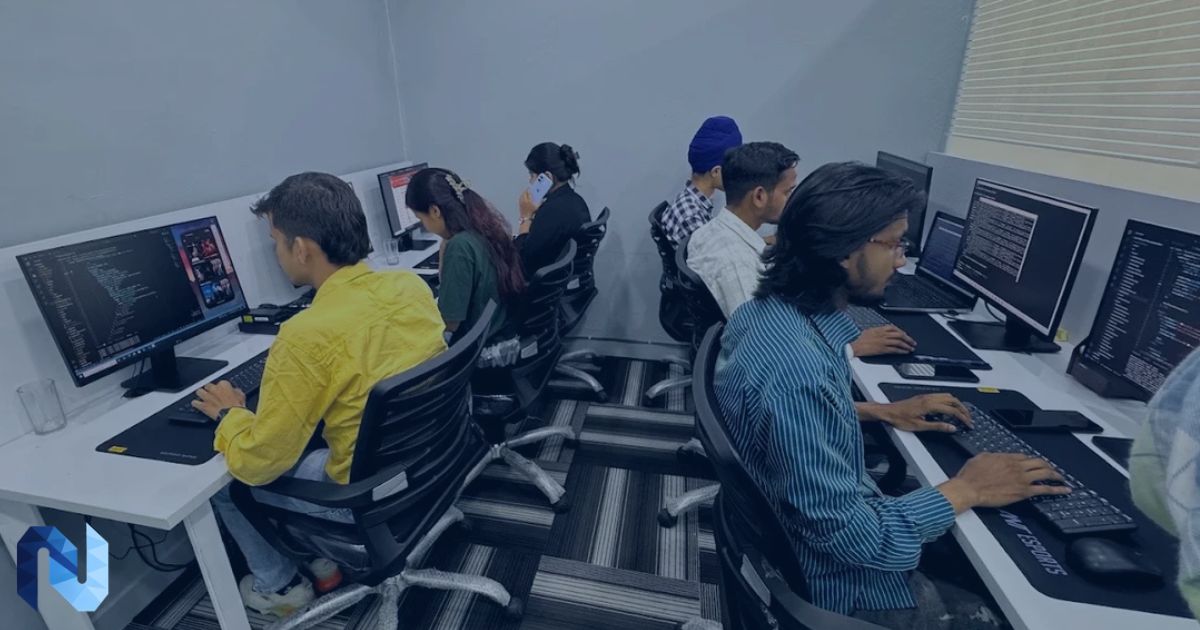
2. A real team, not a real Upwork profile. Ask how many engineers are full-time employees versus contractors brought on per-project. Ask what happens if your assigned developer leaves mid-sprint. A studio with 20+ full-time engineers has redundancy built in; a solo operator doesn't.
3. What they actually ship, not just what they pitch. Ask for a technical walkthrough of a real project, not just a case study slide. Anyone can write "increased conversions by 40%." Fewer people can explain the architecture decisions behind a specific feature and why they made them.
4. Communication cadence, in writing, before you sign. Weekly demos? Async Slack updates? A shared project board you can see in real time? Get this in the proposal, not as a verbal promise.
The Dehradun advantage that doesn't get talked about enough
Working with a team in the same country, same general time zone, and no language-translation layer sounds obvious — until you've dealt with an outsourced team eight time zones away where every clarification costs you a day. A Dehradun-based studio working with a Delhi or Mumbai client has effectively zero communication lag. That's not a minor convenience; over a six-month build, it's the difference between shipping on schedule and constantly re-explaining requirements.
The best engineering teams in Tier-2 cities aren't a compromise on quality — they're often the opposite. Lower overhead means we can spend more hours per project actually building, instead of just staying afloat on volume.
A short checklist before you sign anything
- Is the company ISO or DPIIT certified, and can they show you the certificate numbers?
- How many full-time engineers do they actually employ?
- Can they walk you through the technical architecture of a real past project, not just show you a screenshot?
- What's the communication structure — weekly calls, shared boards, written updates?
- Do they have a documented process for handoff if a team member changes mid-project?
If a company can answer all five clearly and quickly, that's usually a good sign. If they get vague on any of them, that's worth pausing on.
If you're evaluating teams in Uttarakhand right now, ask for their ISO certificate numbers directly — they're a matter of public record and take thirty seconds to verify.
Net Stratix is ISO 9001:2015 and ISO 27001:2022 certified, DPIIT-recognised, and D&B registered — built with a full-time team of 20+ engineers based in Dehradun. If you're evaluating dev partners in Uttarakhand, get in touch and we're happy to walk you through exactly how we work, not just what we say we do.